
Contact us for further details about this Artwork:
WhatsApp number: +39 3388568284
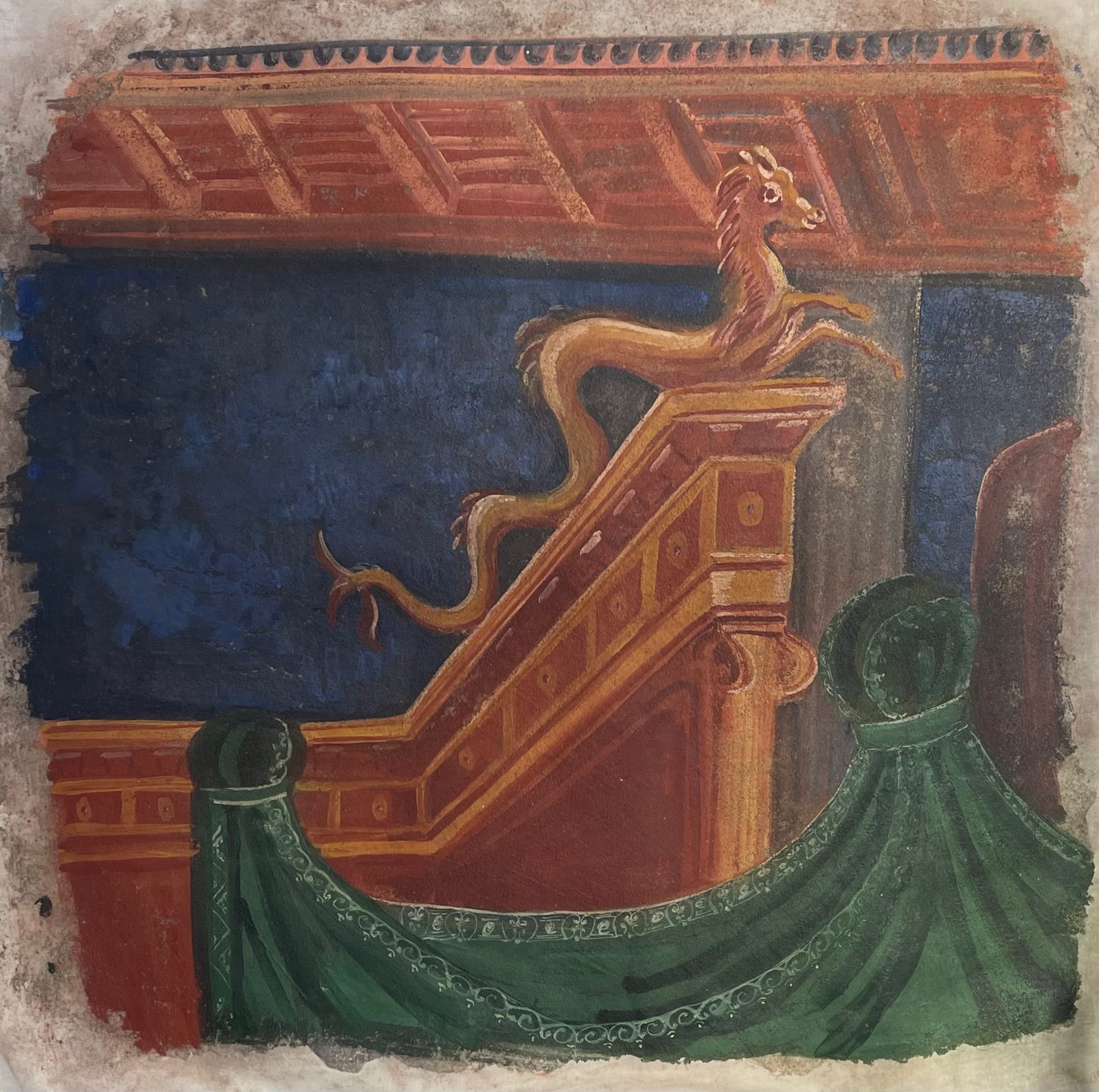
Strappo di Affresco e restauro con tecnica mista
80×70 cm
This artwork is a tribute to Positano and to the ancient history hidden beneath the Church of Santa Maria Assunta, where the Roman Villa, buried by the eruption of Vesuvius in 79 AD, was rediscovered after centuries. The villa’s frescoes, preserved under layers of volcanic mud, revealed vibrant marine imagery: seahorses, dolphins, tritons, and elegant decorative draperies that framed the architectural scenes.
In my painting, I chose to represent one of these seahorses and one of the green draperies that once adorned the villa’s walls. This single fragment becomes a symbol of the beauty and imagination that characterized the ancient residence. In Roman times, marine creatures were not merely decorative motifs; they embodied the myths, beliefs, and stories connected to the sea and to Poseidon, whose name, according to legend, may even be linked to the origins of Positano.
By painting this seahorse, I aim to bring back to life a small piece of that extraordinary villa, a place where daily life and mythology coexisted. It is a way to honor Positano’s memory, its Mediterranean identity, and its timeless relationship with the sea.
This artwork becomes a bridge between past and present: a fragment of ancient fresco that breathes again, reminding us that Positano’s history is not only made of landscapes and beauty, but also of symbols, legends, and creatures that shaped its origins and continue to inspire us today.
Quest’opera è un omaggio a Positano e alla sua storia più antica, custodita per secoli sotto la Chiesa di Santa Maria Assunta, dove la Villa Romana, sepolta dall’eruzione del Vesuvio del 79 d.C., è tornata alla luce con i suoi affreschi straordinari.
Ho scelto di rappresentare uno dei cavallucci marini che decoravano quelle pareti, insieme a uno dei drappi verdi che incorniciavano le scene, per restituire un frammento autentico di quella meraviglia sommersa. Nella Villa, queste creature non erano semplici ornamenti: erano simboli del mondo marino, delle credenze dell’epoca e delle leggende legate a Poseidone, da cui secondo la tradizione deriverebbe il nome stesso di Positano.
Dipingo questo cavalluccio marino come un testimone silenzioso di un passato che continua a parlarci. È un frammento di bellezza antica che riemerge sulla tela per celebrare la memoria della città, il suo legame millenario con il mare e le storie che hanno attraversato il tempo per arrivare fino a noi.
L’opera diventa così un ponte tra epoche: un piccolo pezzo di Villa Romana che torna a vivere, ricordandoci che la storia di Positano non è fatta solo di paesaggi, ma anche di simboli, miti e creature che hanno accompagnato la sua nascita e la sua leggenda.
Contact Us
<- Torna alle Opere di Aerma Polani